
I Finished the Notebook
with a lipstick mark!

My favourite notebook wasn’t even my style.
In fact, if I had seen it sitting on a shelf in some boutique stationery shop, I probably would have walked right past it without a second thought.
It was a Parker notebook: A5, narrow-ruled, and lightly scented with that faint smell of old library books and fountain pen ink. It was a gift from my best friend, and for a long time, I tried to figure out why I liked it so much.
First, I thought it was because it was a gift. Then I thought it was because of the poems I’d scribbled in the margins. The sort of conclusion-heavy lines I was convinced were world-shattering at the time.
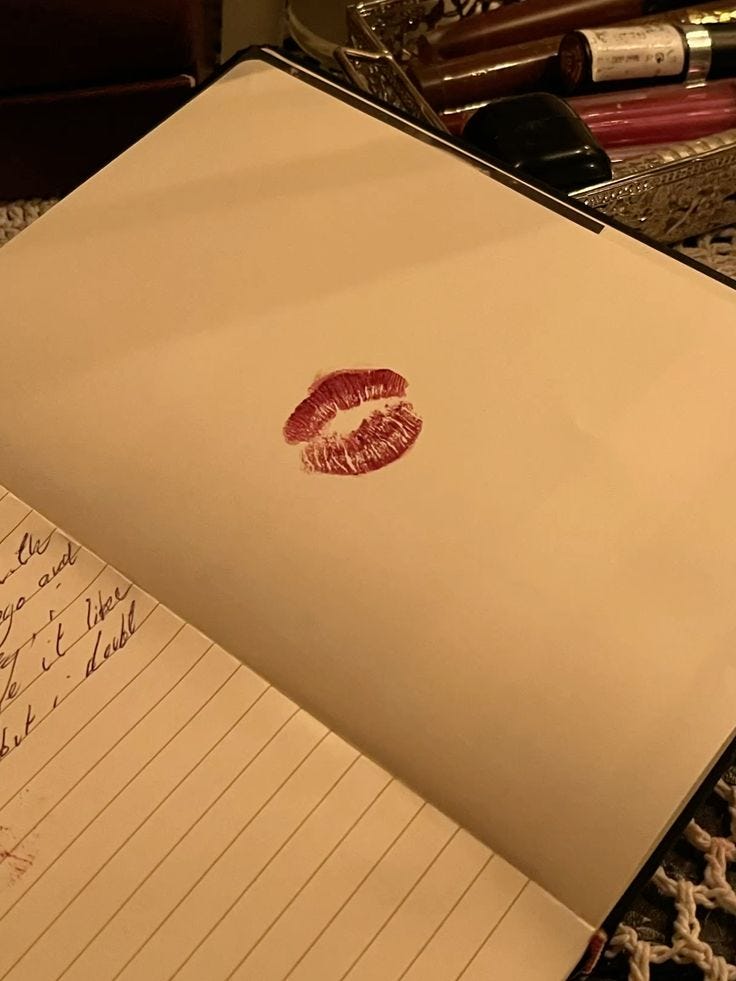
(Spoiler: they were mostly dramatic teenage angst.)
Then I thought it was because I associated it with being sixteen, that strange age where every canon event of a normal life feels like a personal catastrophe. Eventually, I realized none of those explanations felt complete. The notebook wasn’t meaningful because of the paper quality. It wasn’t meaningful because it was expensive. It wasn’t meaningful because it fit some idealized version of who I wanted to be.
It was meaningful because I finished it.
A notebook cannot simply begin. It needs a name, or at least a purpose, before you can trust it with your thoughts. I usually start thinking of the next notebook three or four pages before the current one ends. New notebooks require setup. They require naming. They require introductions. This one began as a tracker. It had my goals, habits and lists initially. Somewhere along the way it became something else.
It turned to the emotional side with poems, reflections, rants and a million “What I did today” entries. And I started a ritual where I would sign entries with a lipstick mark and spray the same perfume that matched the notebook’s scent because sixteen-year-old me was convinced she was mysterious.
By the final pages, it had become a record of a life. When I revisit it now, I revisit a girl. I revisit the vocabulary she used and the problems she thought would last forever. The poems she was convinced were brilliant (which honestly, a few of them are just that good). The lipstick mark she thought made her look mysterious.
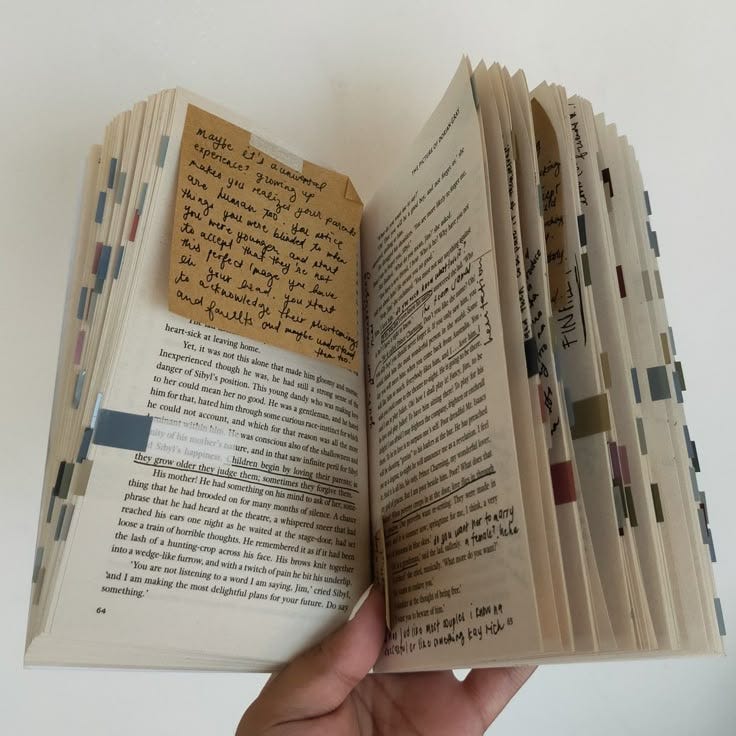
The notebook became meaningful because it accumulated life.
And that realization made me suspicious of something I kept seeing online.
The internet sells us identities.
What Makes an Experience Feel Earned?
The scent, the poems, the goals, the reflections and the tiny little rituals (TMI: I always use a magenta shade in this notebook. It looks good against the warm undertone of the paper)
None of that existed when I opened it for the first time. The meaning wasn’t bought on Day One or even on Week One. It emerged through hundreds of ordinary days.
And I think that’s why so many aesthetic versions of hobbies feel strange to me. To be honest, it’s not because they’re fake. Because they often try to buy the ending without living the middle.
I scroll through #SlowLiving, #Studyblr, and productivity content (I’m trying to say, it’s not that I don’t scroll or that I’m a purist), and I see reading corners that look like they took more effort to build than the actual reading. I see study setups that resemble NASA mission control and a lot of times people with fifteen pristine notebooks they haven’t opened yet. I see “avid readers” who seem more interested in becoming readers than reading. (Book Recc: The Death of Ivan Ilyich)
The notebook has seen less ink than the unboxing video. The internet encourages us to front-load our experiences. To purchase the identity of being a writer before we’ve written. To purchase the identity of being an intellectual before we’ve spent much time thinking.
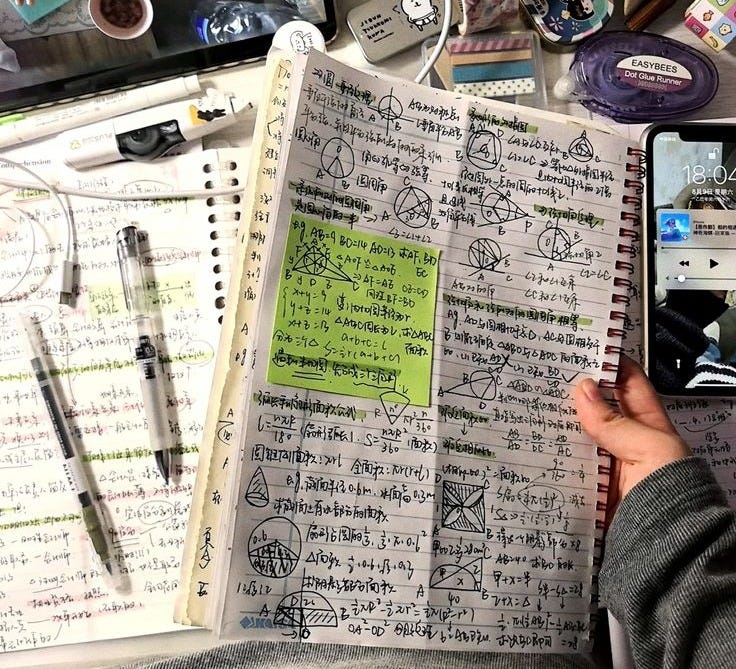
The internet doesn’t really sell you a notebook. It sells you the idea of being the kind of person who journals.
And those are NOT the same thing.
The Conspicuous Self
I couldn’t figure out why certain journaling videos annoyed me. The people weren’t doing anything wrong.
They liked notebooks. I like notebooks. So what exactly bothered me was the question here?
Eventually I stumbled across Thorstein Veblen. In 1899, Veblen argued that members of the leisure class engaged in what he called conspicuous consumption: displaying wealth publicly to signal status.
The goal wasn’t utility but visibility
More than a century later, the objects have changed but the logic remains surprisingly familiar.
Today we perform what some sociologists call the conspicuous self.
We don’t simply display possessions.
We display lifestyles and bundle objects together with messages about who we are.
(Say)
The Book Girl. The Study Vlogger. The Slow Living Creator. The Software Engineer Who Also Climbs Mountains Before Sunrise.
The content isn’t about notebooks or books or coffee but about IDENTITY.
The product being sold is often a version of a person. And increasingly, we are encouraged to consume identities before we have experiences.
Buy the bookshelf before developing reading habits. Buy the stationery before developing a writing practice. (Just writing this annoys me.)
(Oh! And about journaling, you can just use any notebook and a pen/pencil to start. It about what you write and not what you write with.)
The Problem With Aesthetic Culture
The older I get, the more suspicious I become of the idea that we know what we’ll love in advance.
My favorite notebook wasn’t my style. Some of my favorite books weren’t books I expected to enjoy. Some of my closest friendships began with people I didn’t think I’d get along with.
Life keeps rewarding me for being wrong about myself.
Life is seldom about what we think we like being the the thing that we think that we like.
That is what aesthetic culture struggles to allow. Aesthetic culture asks us to decide who we are before we’ve had enough experiences to know.
Pick a core.
Pick a personality.
Pick a wardrobe.
Pick a lifestyle.
Then buy the props.
But real life rarely works that way. Real life is discovered.
Life reveals who we become.
When we prioritize the aesthetic over the experience, we lose our ability to be surprised by our own lives.
And in my opinion, surprise is one of the most valuable things a life can offer.
When Documentation Replaces Participation
I don’t think documentation is the enemy. Humans have always documented their lives. We kept diaries long before Instagram. We took photographs long before stories. I journal almost every day. I keep reading journals. I annotate books until they barely resemble the clean copies I bought. I take photos constantly. At festivals, I am usually the designated memory keeper. I am the friend recording the terrible dancing. The blurry videos.
Documentation can be beautiful.
The problem begins when documentation replaces participation.
When the photo becomes more important than the moment. When the reading nook matters more than the reading. When the study setup matters more than the studying. When the journal exists to be photographed rather than written in. A camera should help us remember a moment. It shouldn’t become the reason we had one.
I think most people can feel the difference instinctively.

One of my favorite photographs of myself isn’t flattering. I’m smiling with my teeth out. My hair is a mess. The angle is terrible. But I remember exactly how happy I was when it was taken.
The photo survived because the moment came first.

The Attention Economy Rewards Appearances
Part of this problem is structural.
We live in an attention economy. Attention is limited and visibility is what is rewarded.
Algorithms can only measure engagement. And appearances are easier to display than processes. Nobody can photograph the slow development of a reading habit. Nobody can film the gradual transformation that comes from years of journaling. Nor can anyone neatly package confusion, boredom, frustration, or persistence.
But they can photograph a desk or a notebook.
So platforms naturally reward the visible markers of a practice more than the practice itself.
The result is a culture increasingly obsessed with symbols. We become collectors of evidence for lives we haven’t yet lived.
Performance Is Not The Enemy
At this point, it would be very easy to write a “social media bad” essay.
But that would be lazy. And it would be dishonest. Because I am literally writing this on Substack. I like sharing ideas and finding people who think differently from me. I like discussions and publishing.
Performance itself is not the problem.
A poet performs.
A dancer performs.
A lecturer performs.
Every writer performs.
The question here is what comes first.
Healthy performance happens when expression follows experience. Unhealthy performance happens when experience follows expression. That distinction matters (a lot, actually).
Because authenticity isn’t the absence of performance.
Authenticity is performance that remains connected to reality.
Analog Living Isn’t About Paper
Ironically, I don’t think analog living is actually about notebooks.
Or fountain pens. Or film cameras. A lot of my life is analog.
I journal, annotate books, read newspapers and most annoyingly (of what most people would agree) fill margins with thoughts.
But I also use technology constantly. I use digital calendars and watch lectures online. I listen to podcasts (true crime, by the way, it relaxes me somehow) while doing mundane tasks. I would be a fool to ignore tools that make life easier.
The point is remaining present enough to develop a relationship with what you’re doing. Analog living is not a collection of objects.
It’s a relationship with time and staying with something long enough for it to change you.
A book. A notebook. A friendship.
A craft.
A life.
Who Have You Become?
When I revisit that Parker notebook, I revisit a girl.I revisit the poems she thought were brilliant. (again, they are.) The words she overused. The problems she thought would last forever. The goals she desperately wanted to achieve.
The lipstick mark she was convinced made her look mysterious.
The notebook never asked me what kind of person I wanted to be. It simply recorded who I was becoming. Maybe that’s why it still matters. 1
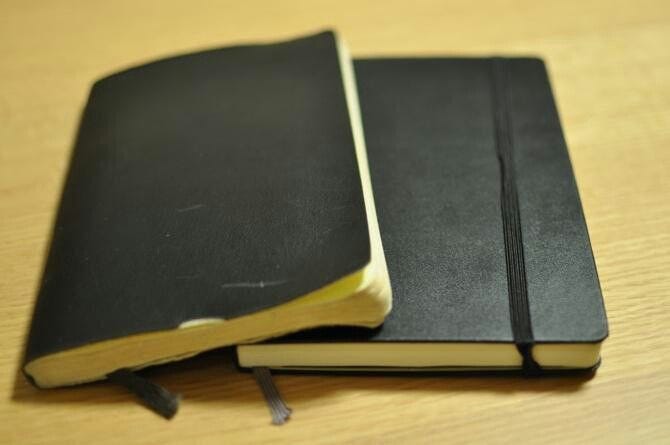
It matters because I stayed with it long enough for it to become evidence. Perhaps that is what the internet struggles to sell us.
Time.
And maybe the most radical thing any of us can do is stay with a practice long enough to earn the identity, instead of purchasing it in advance.2
Let your life be a practice, not just a product.
None of the photos in the post are mine. Hence, the ambiguity. I don’t have the notebook with me right now, haha.
Let me know of your jounalling journeys in the comments ;P. Happy Reading!
This is so insightful, I loved reading all of it! I think my journals started with the same train of thought, wanting to be aesthetic and shape my life around the same "vibe" that I saw people on pinterest follow. While I never really explored the reasoning behind it, I realized that wasn't healthy and ended up with an ambiguous and messy journal at the end of my notebooks, which I cherish forever. This article really put everything into perspective!!